Originally published September 2025. Last updated September 2026.
One of the things I enjoy most about psychology is being involved in where the profession is going, not simply where it has been.
At the 2025 Florida Psychological Association Convention in Tampa, I had the opportunity to participate in two panels addressing issues that I believe will continue to shape psychology for years to come: PSYPACT and interjurisdictional psychology practice, and advanced psychopharmacology training and prescriptive authority for psychologists.
The convention also gave me an opportunity to spend time with psychologists from throughout Florida, participate in professional advocacy through my role with the Psychologists of Florida Political Action Committee as the Chair of that organization, and reconnect with colleagues I have known throughout my career.

Expanding Psychology Through PSYPACT
The first panel was titled “Benefits of Being a PSYPACT Provider: Extending Your Reach & Enhancing Continuity of Care.”
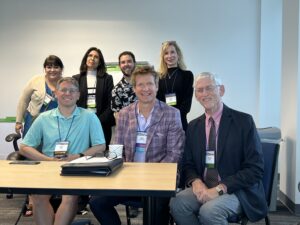
I joined Drs. Jack Bartel, Kevin Hyde, Christiane Blanco-Oilar, Laura Ellick, Teresah Taylor, Bill Samek, and Rebecca Schwartzberg for a discussion about what interstate practice means for psychologists and the people we serve.
My perspective has been shaped by my work as a psychologist who practices interjurisdictionally forensically, clinically, and with organizations all over the U.S and based on my post doctorate masters in clinical psychopharmacology and medical psychology.
I have always believed that psychologists should develop areas in which they become exceptionally knowledgeable. Once you build that expertise, technology and interstate practice make it possible to bring that expertise to people who may live hundreds or thousands of miles away.
That is one of the reasons PSYPACT has been so important to my own professional development.
What PSYPACT Means for My Practice
I hold PSYPACT Authority to Practice Interjurisdictional Telepsychology, allowing me to provide unlimited telepsychology services to clients and patients located in participating PSYPACT jurisdictions which currently includes 42 states. I am also permitted to provide services to patients in person for 30 days a year in those same states. In additional to PsyPACT, I am licensed in six other states. By early 2027, I will either hold a PsyPACT credential or be licensed in all 50 states plus Washington D.C. and Puerto Rico.
PSYPACT has been particularly useful in specialized areas of psychology where the most appropriate psychologist may not necessarily live in the same community as the person or organization seeking services.
This is relevant to specialized clinical work, intensive couples therapy, forensic consultation, professional consultation, when companies want to use the same psychologist to service their employees in multiple states, and in other areas in which expertise and fit may matter more than geography.
Telepsychology and Temporary In-Person Practice Are Different
One clarification is important.
As I explained above, PSYPACT includes two different forms of authority. The Authority to Practice Interjurisdictional Telepsychology (APIT) applies to telepsychology. A separate Temporary Authorization to Practice (TAP) can permit eligible psychologists to practice face-to-face temporarily in another participating jurisdiction.
Under the PSYPACT framework, TAP can allow temporary in-person practice for up to 30 calendar days per year in a participating state, subject to the applicable requirements.
That distinction is important because simply saying someone is a “PSYPACT psychologist” does not explain which authority that psychologist holds. If you are seeking a psychologist across state lines, make sure they have the proper credential to serve you accordingly.
Specialization Is Becoming Increasingly Important in Psychology
One of the points I made during the PSYPACT panel was that interstate practice creates both opportunity and competition.
I actually think this is healthy for the psychology profession. If psychologists are able to reach people beyond their immediate geographic area, it gives all psychologists a greater incentive to develop genuine expertise rather than trying to be everything to everyone. Greater competition will drive the best psychologists to be better; and the less inclined psychologists to exit private practice.
My own career has moved increasingly in that direction. My work now includes specialized areas such as:
- Clinical psychology
- Forensic psychology
- Relationship and couples psychology
- Psychological assessment
- Public-safety and armed-security psychological evaluations
- Military psychology
- Sport and performance psychology
- Clinical psychopharmacology and medical psychology
- Media psychology and public education
Developing expertise in specific areas has also allowed me to work with individuals, couples, attorneys, organizations, security companies and law enforcement agencies, media outlets, and other professionals well beyond my local community.
Psychopharmacology and the Future of Psychology
The second panel was “Perspectives on Prescriptive Authority for Psychologists in Florida.”
I joined neuroscientist Dr. Judi Steinman and prescribing psychologists Drs. Julie Price, Doris Nevin, and Christine Machado-Denis for a discussion about advanced psychopharmacology training and the evolving role of psychologists in psychiatric medication related care.
At the time of that panel, I was still completing my postdoctoral Master of Science program in Clinical Psychopharmacology at Fairleigh Dickinson University.
I talked about something I was already noticing in my own work: studying neuroscience, clinical medicine, pharmacology, laboratory interpretation, and psychopharmacology was changing the way I thought about cases and how I practice.
The training was helping me understand the biological and medical side of psychological treatment at a much deeper level.

Update: Completing My Clinical Psychopharmacology Training
A lot has happened since that panel.
In May 2026, I completed Fairleigh Dickinson University’s Postdoctoral Master of Science in Clinical Psychopharmacology, an APA-designated program preparing appropriately qualified psychologists for advanced work in psychopharmacology and, where legally permitted, prescriptive authority.
In July 2026, I also passed the Psychopharmacology Examination for Psychologists (PEP). Thank goodness the PEP is behind me!
The training has included clinical medicine, neuroscience, pharmacology, psychopharmacology, laboratory interpretation, pathophysiology, and the interaction between psychological and medical treatment.
My interest in this field is not simply about writing prescriptions. It is about becoming a better-informed psychologist and understanding the entire patient more completely.
Prescribing Psychology Has Continued to Expand
When we held the panel in September 2025, seven states authorized appropriately trained psychologists to prescribe under their respective state laws.
Since then, the field has continued to evolve. In 2026, Hawaii and Vermont enacted prescribing psychologist laws, bringing the number of states with prescribing authority for appropriately trained psychologists to nine.
The requirements are not identical from state to state. Advanced education, supervised clinical experience, examinations, collaboration requirements, formularies, and other regulatory requirements can vary considerably.
Read the American Psychological Association’s 2026 Update on Prescribing Psychology
I continue to follow developments in this area closely and participate in professional discussions about the future role of psychologists with advanced psychopharmacology training.
Psychologists of Florida PAC Leadership
Another important part of the convention for me was my role as Chair of the Psychologists of Florida Political Action Committee.
The PAC is separate from the Florida Psychological Association and participates in the political process on issues affecting psychologists and psychological services in Florida.
At the convention, we held a PAC fundraising event and had opportunities to interact with state policymakers attending the meeting.
I also had the opportunity to spend time with Florida Senator Tracie Davis and Representative Erika during the convention.

Professional advocacy has given me a much better appreciation for how decisions made in Tallahassee can affect psychologists, patients, professional standards, and the way psychological services are delivered. And if psychologists are not involved legislatively, then they will be left out of legislation and their ability to help others will be negatively impacted.
A Conversation With Dr. Lenore Walker
One of the more interesting personal moments of the convention was getting the opportunity to visit with Dr. Lenore Walker, whose work on intimate partner violence and the battered woman syndrome has had a major influence on forensic and clinical psychology.
I do not agree with every conclusion Dr. Walker has reached, and that actually made the interaction more interesting.
Psychology advances when we are willing to examine competing research, ask difficult questions, and respectfully challenge ideas rather than simply accepting them because they have been around for a long time.
As someone whose practice includes significant forensic psychology work, I particularly value opportunities to discuss areas where psychological science intersects with courts, domestic violence, trauma, and human behavior.
Twenty Years After Nova Southeastern University
Conventions are about education, but they are also about relationships.
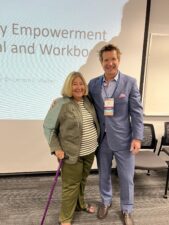
I attended Nova Southeastern University from 1999 to 2004 while completing my graduate training in clinical psychology. More than two decades later, I ran into Dr. Monica King, who was a fellow doctoral student and resident advisor during my time at NSU.
Psychology can feel like a very large profession until you attend a meeting like this and reconnect with people whose careers have developed alongside your own.
Professional Leadership Beyond Clinical Practice
Why Professional Conferences Still Matter
It is easy to think that once you have been practicing for 20 years you have already learned what you need to know.
I have found the opposite to be true. This is especially true following COVID-19. The pandemic’s effects remain. Fewer people participate in in-person conventions, which is unfortunate.
The longer I practice psychology, the more interested I become in where the profession is heading.
PSYPACT is changing where psychologists can provide services. Telepsychology has changed how people access specialists. Psychopharmacology is expanding the knowledge and scope of appropriately trained psychologists. Technology and artificial intelligence are changing how patients consume psychological information. Media and social platforms have changed the way psychologists educate the public.
Those changes create opportunities, but they also require psychologists to stay engaged with the science, ethics, regulations, and professional standards behind them.
Looking Back at the 2025 FPA Convention
The 2025 Florida Psychological Association Convention was memorable for me because it brought together several parts of my professional life at the same time.
I was there as a clinical psychologist, forensic psychologist, PSYPACT provider, psychopharmacology student, practice owner, professional advocate, and colleague.
A year later, some of the things we were discussing have already moved forward. I have completed my master’s degree in clinical psychopharmacology and passed the PEP. PSYPACT continues to be an important part of my interstate psychology practice. Prescribing psychology has expanded into additional states. My professional work has also continued to grow nationally through speaking, media, forensic psychology, and public-safety psychological evaluation.
I look forward to attending the next FPA convention in 2027. In the meantime, tune-in for my Psychologists of Florida PAC videos as I attempt to persuade other psychologists to donate to the PAC to ensure we have a legislative seat at the table allowing us to guide our profession rather than to be guided by others.
Learn More About the Florida Psychological Association