Originally published August 2017. Last updated September 2026.
Should couples share their location with each other? Like a lot of relationship questions, my answer is: it depends on why you are doing it.
In 2017, I was interviewed by GQ for an article about location sharing in romantic relationships. The article, written by Beca Grimm, explored when sharing your location can be practical and healthy and when it can cross the line into surveillance, jealousy, or possessiveness.
That conversation still feels very relevant today because technology has become even more woven into relationships. Phones, smartwatches, location services, social media, messaging apps, and connected devices now give couples access to information that previous generations simply did not have.
Featured in GQ: Location-Sharing Is Caring When You’re in a Relationship
GQ identified me as a psychologist specializing in romantic relationships and marriage counseling and asked me to explain the psychology behind couples sharing their locations.
My main point was simple: healthy location sharing depends on consent and motivation.
Is Location Sharing Healthy in a Relationship?
Location sharing itself is neither healthy nor unhealthy.
The better question is: What purpose is it serving?
For some couples, it is simply convenient. You may want to know whether your partner is almost home, whether they made it safely to a destination, or where to find each other in a crowded place.
Those are very different motivations from checking a partner’s location because you are suspicious, jealous, afraid they are cheating, or trying to monitor their behavior.
Consent Matters
Healthy location sharing should be voluntary.
Both people should understand what is being shared, why it is being shared, and whether the sharing is temporary or ongoing.
If one partner feels pressured to provide constant access to his or her location simply to keep the other person calm, the technology may be masking a larger trust problem.
A relationship should not require constant digital proof that someone is behaving.
Convenience Is Different From Surveillance
This distinction is important.
If I check my spouse’s location because we are meeting somewhere and I want to know whether she is five minutes or thirty minutes away, that is logistics.
If I repeatedly refresh the map because I am trying to determine whether she is really where she said she would be, that is something very different.
The behavior may look identical on the phone. The psychology behind it is not.
Location Sharing Can Expose Trust Problems
Technology can sometimes create the illusion that more information will eliminate relationship anxiety.
It usually does not.
If someone already struggles with jealousy or mistrust, access to more data can actually create more opportunities to become suspicious.
A location dot is imperfect information. GPS can be delayed or imprecise. Someone can stop somewhere unexpectedly. A partner can interpret an ordinary event through an already suspicious mindset.
Instead of relieving anxiety, constant checking can reinforce it.
When Location Sharing Becomes Compulsive
One warning sign is when checking becomes difficult to resist.
A person may start looking at the map repeatedly throughout the day, comparing locations with text messages, looking for inconsistencies, or becoming distressed when the partner’s location is temporarily unavailable.
At that point, location sharing may no longer be serving the relationship. It may be feeding reassurance seeking, jealousy, or obsessive monitoring.
The solution is usually not more tracking. The couple needs to address the underlying trust issue.
Infidelity Changes the Conversation
Location sharing gets more complicated after an affair.
Following infidelity, increased transparency may temporarily be part of rebuilding trust. That can include greater openness about schedules, travel, communication, and sometimes location.
But there is an important difference between temporary transparency designed to rebuild safety and permanent surveillance.
The long-term goal of affair recovery should not be for one partner to become the other’s probation officer.
Learn More About Infidelity and Relationship Recovery
Technology Has Changed Relationships
The GQ article was published in 2017, but the underlying issue has only grown.
Couples now have access to:
- Real time phone location
- Smartwatch activity and health data
- Shared calendars
- Read receipts
- Social media activity
- Connected vehicles
- Home security systems
- Shared financial accounts
- Digital photo histories
Every one of these technologies can be used in a healthy way or an unhealthy way.
The technology is rarely the real issue. The issue is usually trust, boundaries, consent, insecurity, communication, or control.
A Forensic Psychology Perspective on Digital Relationships
My perspective on relationship technology also comes from my work in forensic psychology and family-law cases.
Digital information increasingly becomes part of relationship conflict, divorce, custody litigation, and infidelity disputes.
People often underestimate how much information their phones, watches, vehicles, applications, and other devices record.
That does not mean couples should become paranoid about technology. It means we need to understand that digital behavior has become part of modern relationship behavior.
Three Questions I Would Ask Before Sharing Your Location
Before turning on permanent location sharing, I would ask:
- Why do we want to do this? Is it for convenience and safety, or reassurance and monitoring?
- Do we both genuinely agree? Consent should not come from fear of upsetting the other person.
- What happens if one of us turns it off? If turning off location sharing immediately creates accusations, the couple probably has a trust problem that technology cannot solve.
Relationship Psychology Has Been a Major Part of My Work
I have worked with couples and relationship problems for more than two decades.
My work has included marriage counseling, premarital preparation, infidelity, trust, intimacy, communication, divorce, high-conflict relationships, parenting disagreements, and helping couples decide whether and how a relationship can be repaired.
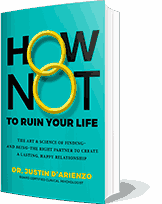
That work has also led to relationship books, online courses, television and media interviews, social-media content, and The Dr. D’Arienzo Show.
Learn More About My Relationship Psychology Work
Explore My Relationship Books and Publications
Relationship Psychology in the Media
I enjoy talking with journalists because relationship psychology is one of those subjects almost everyone can relate to.
Over the years, I have been interviewed about infidelity, dating, marriage, long-distance relationships, social media, intimacy, jealousy, divorce, parenting, communication, and other issues that affect couples.
The GQ article is one example of the kind of media work I enjoy most: taking a common behavior and explaining the psychology underneath it in straightforward language.
View My Media Appearances and Psychology Commentary
Follow Dr. D’Arienzo for Relationship and Psychology Content
I also talk regularly about relationships, psychology, human behavior, and forensic issues through social media.
Follow Dr. D’Arienzo on TikTok
Follow Dr. D’Arienzo on Instagram
Watch Dr. D’Arienzo on YouTube
Couples Counseling and Relationship Services
If location sharing has become part of a larger pattern of jealousy, infidelity, mistrust, conflict, or communication problems, addressing the underlying relationship may be more productive than arguing about the technology itself.
D’Arienzo Psychology provides couples and relationship services in person and virtually where legally and clinically appropriate.
As a psychologist with PSYPACT authority, I may also provide eligible telepsychology services to clients located in participating PSYPACT jurisdictions when applicable requirements are met.
Learn More About Couples and Marriage Counseling
Request Relationship or Couples Services
If your relationship is struggling with trust, infidelity, jealousy, communication, intimacy, or another recurring problem, contact us and tell us what is happening.
This page summarizes Dr. Justin D’Arienzo’s contribution to a GQ article and provides additional relationship education. The original GQ article remains the property of GQ and its author.